


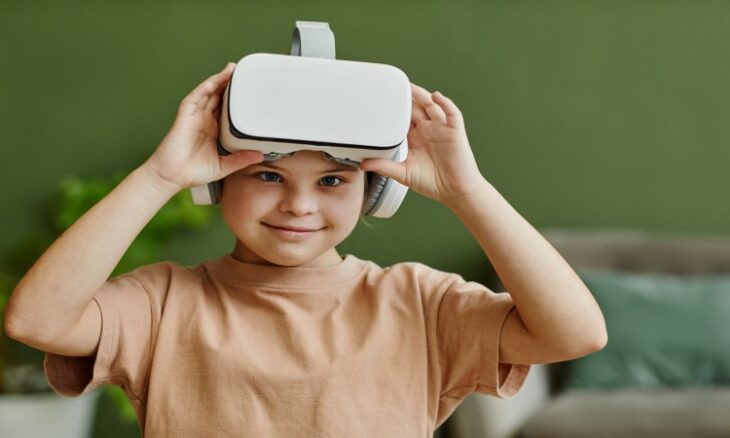
VR Training Improves Police Interaction Responses
A randomised controlled trial published in the Journal of Autism and Developmental Disorders has found that virtual reality-based training improved some police-interaction responses among autistic participants when compared with a video-based educational programme. Researchers reported reductions in fidgeting behaviour alongside improvements in verbal responses and overall interaction performance during live assessment encounters involving police or security personnel.
The study examined whether the Floreo Police Safety Module could help autistic persons manage police encounters more effectively than BeSAFE The Movie, a video-based intervention programme. Researchers stated that interactions with police officers can be particularly stressful for autistic people because of difficulties with unfamiliar social situations, sensory overload, and rapid verbal communication. Previous studies have also identified an increased risk of adverse outcomes during law enforcement encounters for autistic individuals, including injury, use of force, and discrimination.
The researchers noted that autism-focused police training initiatives have expanded in the United States, although many police departments continue to have limited preparation for supporting neurodiverse individuals. Existing interventions often rely on simulation exercises, which researchers described as difficult to scale and limited in their ability to reproduce unpredictable police encounters. The study therefore, assessed whether virtual reality training could provide a practical alternative.
The trial involved 47 verbally fluent autistic participants aged between 12 and 60 years who met Diagnostic and Statistical Manual of Mental Disorders, Fifth Edition criteria for autism. All participants had an intelligence quotient (IQ) score of at least 75, as measured by the Wechsler Abbreviated Scale of Intelligence. Participants were randomly assigned to either the virtual reality intervention group or the video-based comparison group.
Before the intervention sessions began, participants completed several standardised autism assessments, including the Autism Diagnostic Observation Schedule, the Social Communication Questionnaire, and the Autism Spectrum Quotient. Participants also completed questionnaires measuring their understanding of police encounters and their confidence when communicating with officers. Each participant then took part in a recorded mock interaction with a study staff member simulating a law enforcement encounter.
Researchers evaluated changes in fidgeting behaviour, appropriate verbal responses, orienting behaviour, and overall interaction quality during live assessment encounters involving study staff, police officers, or security personnel. Participants completed three 45-minute intervention sessions.
Throughout the virtual reality sessions, trained staff provided immediate feedback while participants interacted with simulated police officers. Participants assigned to the comparison group completed BeSAFE lessons involving videos, worksheets, and interactive role-play exercises. Following the intervention period, participants completed another interaction involving a police officer or security staff member to assess whether behavioural changes remained evident during live encounters.
The researchers also examined secondary outcomes, including participant-reported comfort, confidence, and knowledge regarding police encounters. Staff members and officers additionally assessed participant behaviour and anxiety using linear mixed-effects statistical models.
According to the findings, the clearest difference between the two groups was a reduction in fidgeting behaviour within participants who completed the Floreo Police Safety Module. Researchers observed significant decreases in fidgeting during videotaped live encounters after training in the virtual reality group, while fidgeting levels in the BeSAFE group showed little change. The study identified fidgeting as a behaviour associated with stress or anxiety.
Participants in the virtual reality group also showed improvements in appropriate verbal responses and overall interaction quality during face-to-face encounters with police or security personnel. However, researchers reported that the main intervention-by-time interaction was not statistically significant for these outcomes. Neither intervention produced considerable progress in orienting behaviour, which assessed how participants directed their eyes and body positioning towards officers during interactions.
The study found that behavioural changes observed following virtual reality training remained evident during encounters with unfamiliar officers after the intervention sessions. Researchers stated that both intervention groups reported increased feelings of knowledge, confidence, calmness, and safety during police encounters following training. However, clearer measurable behavioural changes during coded live-interaction assessments were observed only in the virtual reality group.
Researchers also reported that participants with higher Autism Spectrum Quotient scores generally described lower levels of comfort and confidence around police officers, indicating greater difficulties among individuals with more pronounced autistic traits.
The authors stated that virtual reality training enabled repeated practice across scenarios, including varying officers, environments, sensory conditions, and stress levels. The study reported that this type of training provided realistic and repeatable practice opportunities across multiple situations.
The researchers concluded that virtual reality training may help autistic individuals prepare for stressful police encounters while reducing anxiety-linked behaviours during interactions. They reported that the effects identified in the study were modest and emerged after a limited number of sessions. The intervention showed the clearest advantage over the comparison programme in reducing fidgeting behaviour.
The study also identified several limitations. The participant group was relatively small and consisted primarily of White participants, while autistic individuals with intellectual disabilities were excluded from the trial. Researchers further disclosed that some investigators had financial or employment connections to Floreo. The authors stated that additional independent research involving more varied populations would be required to confirm the findings. They also recommended further studies involving autistic people of colour, individuals with intellectual disabilities, and virtual reality-based training programmes for police officers.